The agent system exposes a memory tool , and the model triggers it based on a memory policy.
When triggered, the system writes to an external store (vector DB) and later retrieves relevant bits back into the context window.
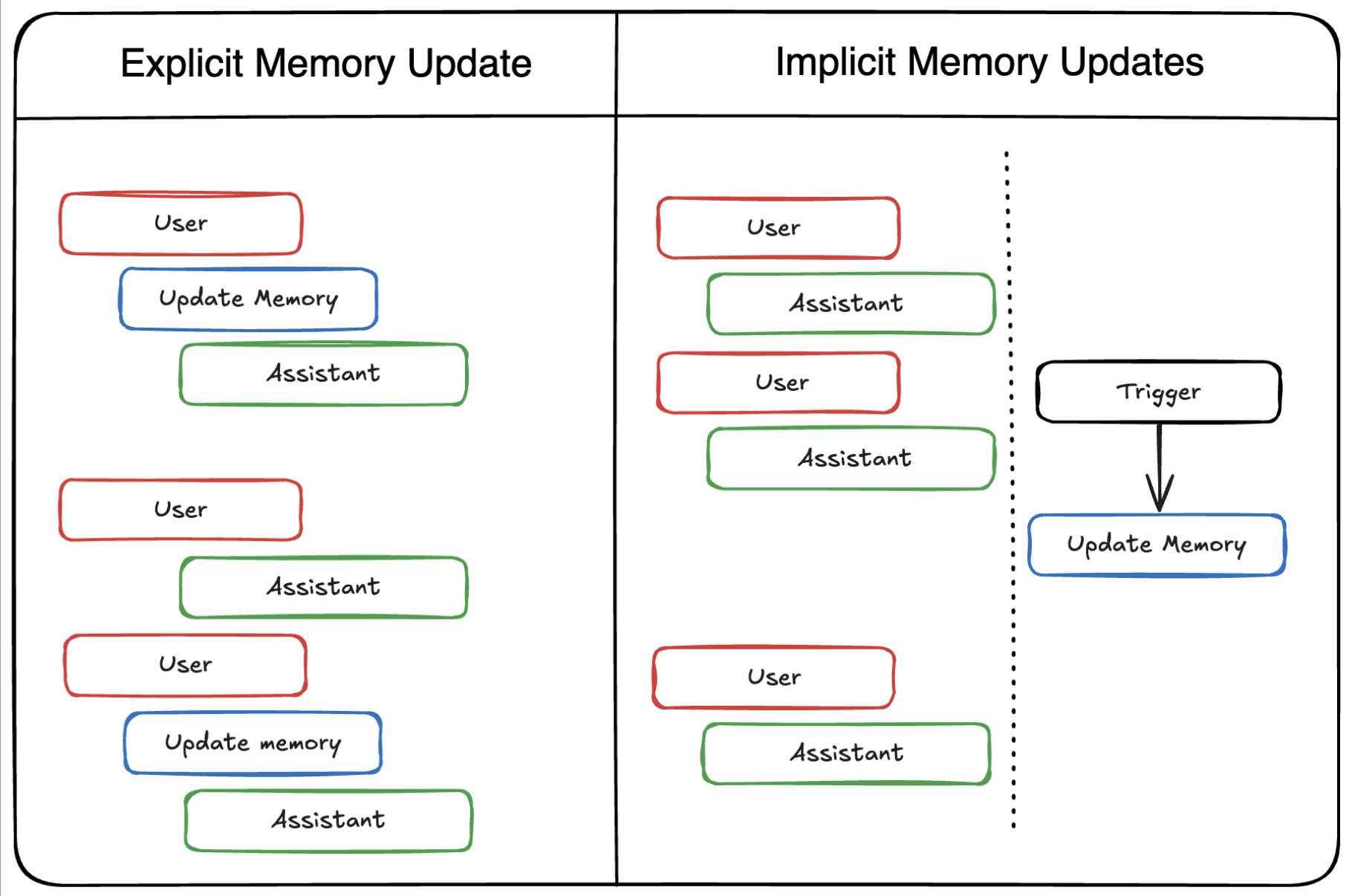
The 2 common write paths it can follow :
- Explicit write (hot path): The agent identifies that something is important during the conversation and saves it immediately using tool calling. This updates long-term memory right away, so it can be used in the next turn.
- Implicit write (background): The agent responds first, and a background process later summarizes/extracts useful facts and writes them to long-term memory either after a session or during periodic intervals, This avoids latency, but the memory may not be available instantly for the next message.
But what kind of data goes to long-term memory ?
It typically falls under these 3 buckets:
- Agent Memory Types (semantic, episodic, and procedural memory)
This kind of context memory management, by offloading context to long-term memory, helps prevent memory bloat and keeps the context window clean with relevant and sufficient data